


Building a Support System Before You Need One: Why Our Final Free Aging in Place Workshop May Be the Most Important Yet
Jenna Hilchey, BScN RN CPHCN(C)

What This Article Covers
Why planning for aging should start before a crisis
The hidden burden many family caregivers carry alone
What participants learned during our Aging in Place Workshop Series
Why the final workshop, Building a Support System & Having "The Talk," may be the most important session of all
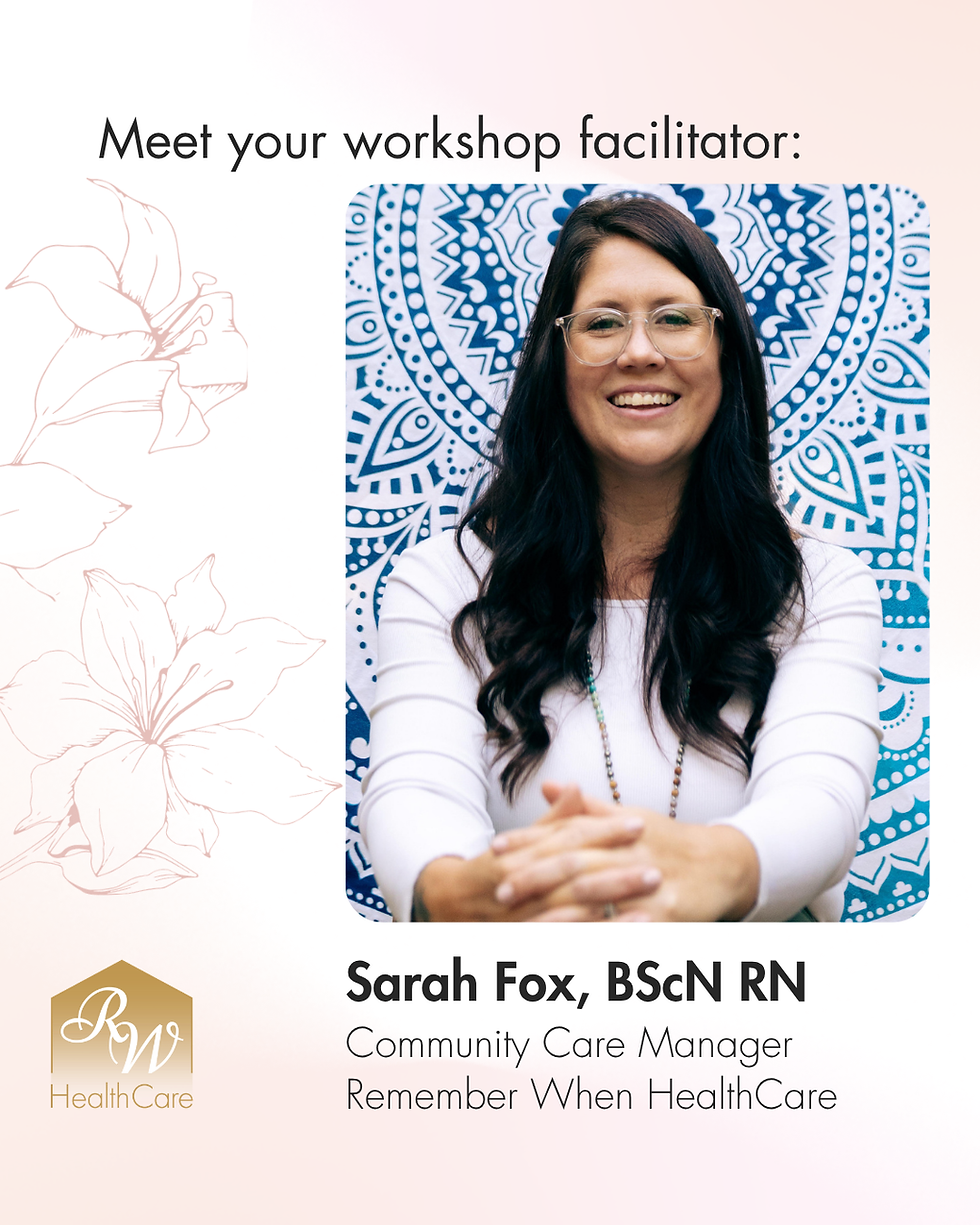
Meet Sarah Fox, BScN RN, Community Care Manager and workshop facilitator
How to register for the final free workshop
Frequently Asked Questions
Most families don't realize they need a support system until they're already overwhelmed.
A fall happens.
A hospital stay turns into weeks of appointments.
Memory loss starts becoming more noticeable.
A spouse becomes exhausted trying to manage everything alone.
And suddenly, a family finds itself trying to make important decisions while running on stress, fear, and very little sleep.
At Remember When HealthCare, we've had thousands of conversations with family caregivers across Nova Scotia and Prince Edward Island. Many tell us the same thing:
"I wish we had started planning sooner."
That is exactly why we created our free Aging in Place Workshop Series.
Over the past several weeks, community members have joined us to learn about funding, navigating healthcare, preparing homes for aging, and planning for the future.
Now we have reached the final workshop in the series.
And in many ways, it may be the most important one.
Why Is Building a Support System So Important?
One of the biggest myths in caregiving is that families should be able to do everything themselves.
Many families find themselves caring for aging parents while simultaneously supporting spouses, children, grandchildren, and their own health needs.
Research consistently shows that family caregivers experience higher levels of stress, anxiety, depression, and burnout than non-caregivers (Keating & Eales, 2017).
Yet many people continue trying to manage alone.
Why?
Because they feel guilty asking for help.
Because they don't know what resources exist.
Because they don't want to burden others.
Because they think things aren't "bad enough" yet.
The reality is that support systems work best when they are built before a crisis occurs.
Planning ahead allows families to make thoughtful decisions rather than emergency decisions.
What Have Families Learned Throughout the Workshop Series?
Our Aging in Place Workshop Series was designed to help people navigate some of the most common challenges associated with aging, caregiving, disability support, and maintaining independence at home.

Workshop 1: Understanding Care Options & Funding
Many people are surprised to learn how complicated healthcare navigation can be.
Participants learned about:
Public, private, and community-based care
Government funding programs
Home care and long-term care options
Caregiver benefits
Tax credits
Waitlists and assessments
Resources available while waiting for services
Each participant received a worksheet to take home and use immediately.
For many attendees, this workshop provided clarity around senior homecare, homecare solutions, affordable homecare options, and care for elderly in home situations.
Why Is Understanding Care Options & Funding So Important?
One of the biggest stressors caregivers face is uncertainty.
Studies show that navigating fragmented healthcare systems contributes significantly to caregiver burden and emotional distress (Williams et al., 2022).
Understanding available supports can help families make informed decisions and reduce anxiety about the future.
Knowledge is often the first step toward peace of mind.
Workshop 2: Navigating Transitions From Hospital to Home
Hospital discharge is one of the most stressful experiences many families face.
Participants learned:
What discharge planning should include
Questions to ask healthcare teams
Home care services after surgery
Temporary versus long-term care needs
Preventing hospital readmissions
Creating practical discharge plans
Each participant received a discharge planning workbook designed to help families feel more confident during the transition home.
For many caregivers, this workshop highlighted the importance of in-home care, homecare services, and planning before a loved one leaves the hospital.
Workshop 3: Preparing the Home for Aging in Place
Most falls and injuries happen in places people know best: their own homes.
This workshop focused on practical ways to make homes safer and more comfortable.
Topics included:
Fall prevention
Bathroom safety
Bedroom safety
Home modifications
Assistive devices
Technology for independence
Planning for future changes
Participants received a comprehensive Home Safety Checklist to help identify risks in their own homes.
Many attendees commented that they had never looked at their home through the lens of aging before.
Why Might Workshop 4 Be the Most Important?
The final workshop is called:
Building a Support System & Having "The Talk"
And honestly?
This is the conversation most families avoid.
Not because they don't care.
Because it's hard.
Talking about aging, future care needs, memory loss, end-of-life wishes, independence, and family responsibilities can feel uncomfortable.
Many families postpone these conversations for years.
Unfortunately, waiting often means having these discussions during a crisis.
When emotions are high and decisions must be made quickly.
Research shows that advance care planning improves decision-making, reduces stress for families, and increases confidence in future healthcare decisions (Duggleby et al., 2020).
What Will You Learn During Building a Support System & Having "The Talk"?
This workshop focuses on both practical planning and emotional preparation.
Topics include:
How to Build a Support Network
Caregiving was never meant to be a one-person job.
Participants learn how to identify and strengthen their care circle, including:
Family members
Friends
Neighbours
Community organizations
Healthcare providers
Professional supports
What If You Don't Have Family Nearby?
This is becoming increasingly common.
Many older adults have adult children living in different provinces or even different countries.
The workshop explores:
Community resources
Volunteer programs
Social supports
Transportation options
Respite resources
Local connections
Because support does not always have to come from family.
How Do You Have "The Talk"?
Perhaps the most valuable part of the session focuses on starting conversations around:
Independence
Safety concerns
Driving
Living arrangements
Future care preferences
End-of-life wishes
Many people know they need to have these conversations.
Few know how to begin them.
Sarah provides practical, compassionate guidance that helps families approach these discussions with confidence rather than fear.
Why Are Legal and Medical Plans Important?
Participants also learn about:
Powers of Attorney
Personal Directives
Healthcare decision-making
Future planning
These topics can feel overwhelming.
However, having plans in place can significantly reduce stress during emergencies.
Meet Sarah Fox, BScN RN
One of the reasons these workshops have been so well received is the person leading them.
Sarah Fox, BScN RN, is Remember When HealthCare's Community Care Manager.
Sarah brings both professional expertise and genuine compassion to every session.
Participants consistently comment on how approachable and relatable she is.
Rather than overwhelming attendees with medical jargon, Sarah focuses on practical information families can actually use.
She understands that most people are not looking for complicated healthcare language.
They want answers.
They want guidance.
And most importantly, they want reassurance that they are not alone.
Sarah's ability to connect complex healthcare topics with real-life caregiving experiences has made these workshops a valuable resource for families across Nova Scotia.
What Take-Home Resource Will You Receive?
Every workshop in the series includes a practical take-home worksheet.
For Workshop 4, participants receive:
What Matters to Me as I Age: A Personal Reflection & Planning Guide
This resource helps individuals think through:
Personal values
Future preferences
Support systems
Healthcare wishes
Quality of life priorities
Many participants have described it as one of the most meaningful resources they have completed.
How Can You Register?
The final workshop takes place next week.
There are still spaces available on both Wednesday and Thursday.
Best of all?
It's completely free.
You can register through our workshop page.
Whether you are caring for a parent, supporting a spouse, planning for your own future, or simply curious about aging well, this workshop offers practical tools that can help you feel more prepared and less overwhelmed.
Why Are We Offering These Workshops For Free?
Because education should be accessible.
At Remember When HealthCare, we believe our role goes beyond providing senior homecare, memory care, diabetic foot care, companionship services for seniors, elderly companionship, and in-home care.
We believe in helping people understand their options.
We believe in reducing caregiver stress.
We believe in helping families navigate systems that can often feel confusing and overwhelming.
And we believe that informed families make better decisions.
Sometimes the most valuable thing we can offer isn't a service.
It's knowledge.
Short Summary
Most families don't plan for aging until a crisis forces them to.
Our final Aging in Place Workshop focuses on helping individuals and families build support systems, have meaningful conversations, and prepare for the future before difficult decisions become urgent.
Led by Sarah Fox, BScN RN, Community Care Manager, this free workshop provides practical guidance, valuable resources, and a take-home planning guide designed to help families feel more confident and less alone.
Registration is still open for next week's final session on Wednesday and Thursday.
We would love to see you there.
Frequently Asked Questions
How does in-home nursing care work in Nova Scotia?
In-home nursing care allows licensed nurses to provide assessments, medication management, wound care, chronic disease support, health monitoring, and post-hospital care in a person's home. Services may be publicly funded, privately funded, or a combination of both depending on individual circumstances.
Where can I get daily living support like meal prep and errands in Nova Scotia?
Many homecare providers offer support with meal preparation, grocery shopping, transportation, companionship, housekeeping, and other daily activities. These services can help older adults and persons living with disabilities remain independent at home.
How to book specialized Alzheimer's support at home in Nova Scotia?
Specialized Alzheimer's support can be arranged through homecare providers that offer memory care services. These supports may include companionship, cognitive stimulation, personal care, respite for caregivers, and individualized care plans tailored to the person's needs.
How to book specialized Alzheimer's support at home in Nova Scotia?
Specialized Alzheimer's support can be arranged through homecare providers that offer memory care services. These supports may include companionship, cognitive stimulation, personal care, respite for caregivers, and individualized care plans tailored to the person's needs.
References
Duggleby, W., Penz, K., Goodridge, D., Wilson, D., Leipert, B., Berry, P., & Justice, C. (2020). Advance care planning and family caregiver outcomes in Canada. Canadian Journal on Aging, 39(3), 351-363.
Keating, N., & Eales, J. (2017). Social consequences of family care of older adults. Canadian Journal on Aging, 36(2), 147-159.
Williams, A. M., Lum, J. M., Morton-Chang, F., Kuluski, K., Peckham, A., Warrick, N., & Ying, A. (2022). Integrating care for older adults and caregivers in Canada. Healthcare Policy, 17(4), 12-25.


Comments